
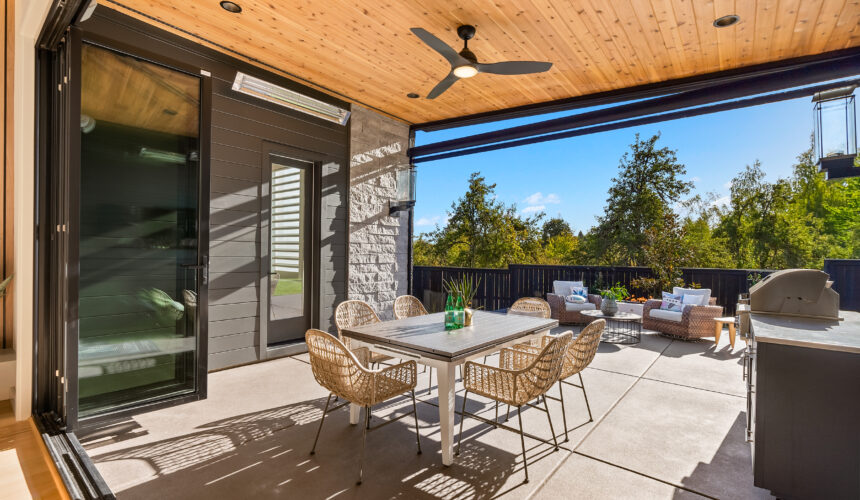
A home affects your health more than most people expect. According to the EPA, Americans spend about 90% of their time indoors, and indoor levels of some pollutants are often two to five times higher than outdoors. The air you breathe, the water you drink and the light you live under at home all add up over years.
A wellness-centric home is designed around those three things from the start. It also tends to be a more efficient home, because the features that keep the air clean and the temperature steady are the same ones that cut energy use. Here is what that looks like in practice.
Air quality
Indoor air picks up pollutants from cooking, cleaning products, new furniture and finishes, and moisture. In a tight, energy-efficient home, those pollutants need a planned way out. Opening a window now and then isn’t enough.
That planned way out is mechanical ventilation. An energy recovery ventilator (ERV) brings in a steady supply of fresh, filtered outdoor air and exhausts stale air, while recovering most of the heat or coolness so you aren’t paying to condition the outdoors. Marnella homes use a Broan ERV with the Virtuo intelligent air monitoring system, which tracks air quality and adjusts ventilation on its own.
Three other things matter:
- Humidity. The EPA recommends keeping indoor humidity between 30% and 50%. Below that, the air feels dry. Above 60%, mold and dust mites thrive.
- Filtration. During wildfire smoke events, the EPA recommends a MERV 13 filter in a central system where the equipment can handle it. In the Pacific Northwest, that is now a summer planning item.
- Materials. Low-emission paints, adhesives and cabinetry release fewer chemicals into the air in the months after you move in.
We cover the sources of indoor air pollution in more detail in The Unseen Intruder, and the most common ventilation errors in ventilation mistakes that sabotage healthy homes.
Water quality
Municipal water meets federal standards, but those standards don’t cover everything. In 2024 the EPA set the first national limits for PFAS (“forever chemicals”). In 2025 testing, eight of the City of Vancouver’s nine wellfields exceeded those limits, and the city is adding carbon treatment. Portland is building a filtration plant for its Bull Run supply to meet federal rules on cryptosporidium. Many pharmaceuticals aren’t regulated in drinking water at all.
Two types of home filtration cover most needs. A whole-home carbon system treats the water for every tap and shower. A reverse osmosis system at the kitchen sink removes a wider range of contaminants from drinking and cooking water. The hard part in an existing home is the installation: it means opening walls and adding plumbing and power. That’s why every Marnella home is pre-plumbed for both, so either system can be added on day one or in year five without demolition.
Water efficiency belongs here too. Short hot-water runs and low-flow fixtures cut the water that goes down the drain while you wait for it to warm up. Read more in What Toxic Cocktail Is In Your Water?
Light
Light sets your body clock. Bright daylight in the morning helps you wake up and stay alert. Warm, dim light in the evening lets your body produce melatonin and get ready for sleep. Bright, blue-rich light late at night delays it.
In the Pacific Northwest, winter makes this harder. Portland gets under nine hours of daylight in late December, and much of that is under cloud. Good design brings in as much of that light as possible. That means generous south-facing windows placed to light the rooms you use most, and open plans that let daylight reach deeper into the home.
After dark, lighting can do the same job. Marnella homes use the Jasco SmartCycle lighting system, which shifts color temperature and brightness through the day to follow a natural daylight pattern. It’s covered in detail in our smart lighting guide.
Comfort and efficiency
Steady temperatures, quiet rooms and low utility bills are part of a healthy home too. The same airtight, well-insulated shell that keeps pollutants and moisture out also keeps heat in during winter and out during summer. Triple-pane windows like the ones in our 6th St Townhomes cut outside noise as well as energy use.
A home for every stage of life
Clean air, clean water and good light matter at every age, from young children to grandparents. They also fit naturally alongside design that lets a home adapt over time, such as a main-floor bedroom and wider doorways. Read more about homes designed for every stage of life.
Where to start
All of this is easiest and least expensive to plan before construction starts, when ducts, plumbing, windows and wiring are still lines on a drawing. If you are planning a new home in the Portland or Vancouver area, talk to us about building air, water and light quality in from the start. For a look at how these pieces fit together, see The Vision for Future Homes and how wellness features deliver long-term value.
Sources: EPA, indoor air quality · EPA, mold and moisture · EPA, wildfire smoke · City of Vancouver, PFAS mitigation · Portland Water Bureau, Bull Run filtration
